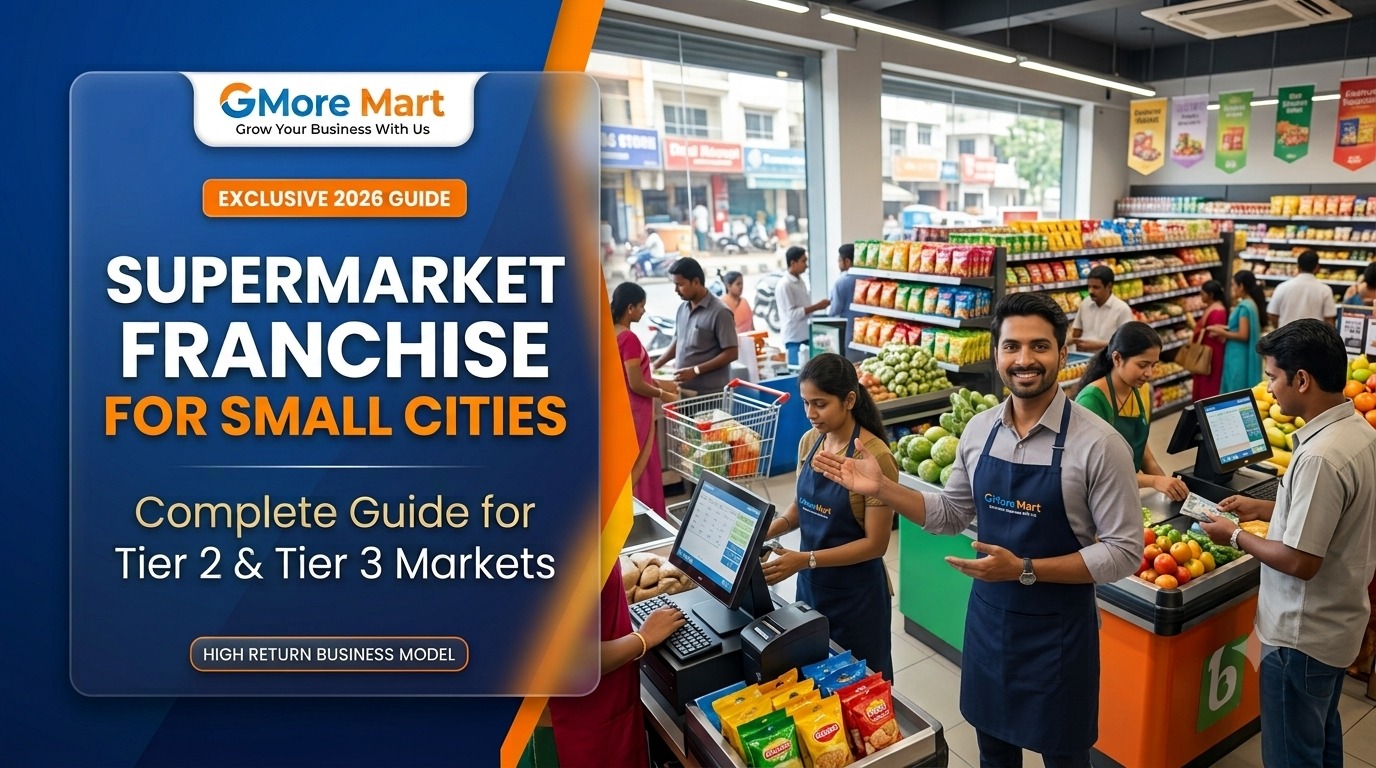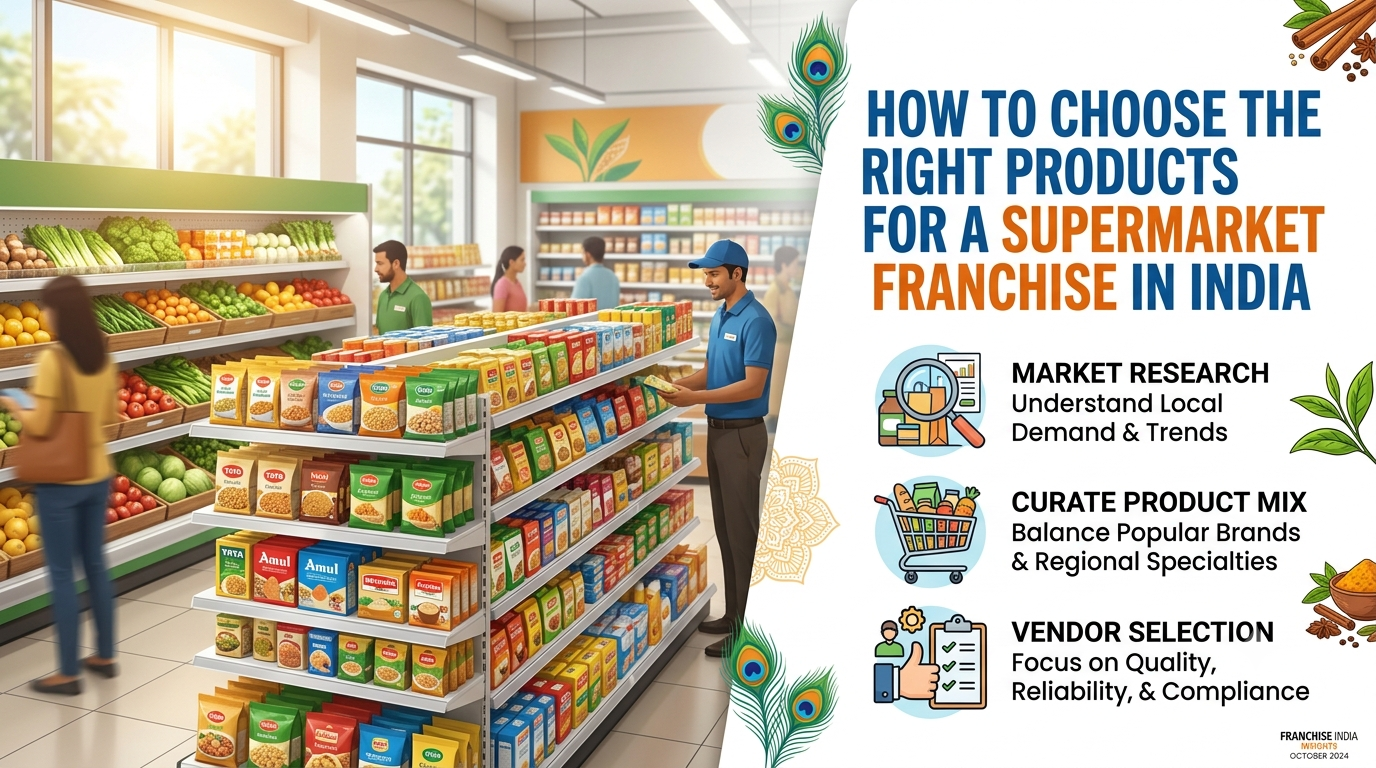
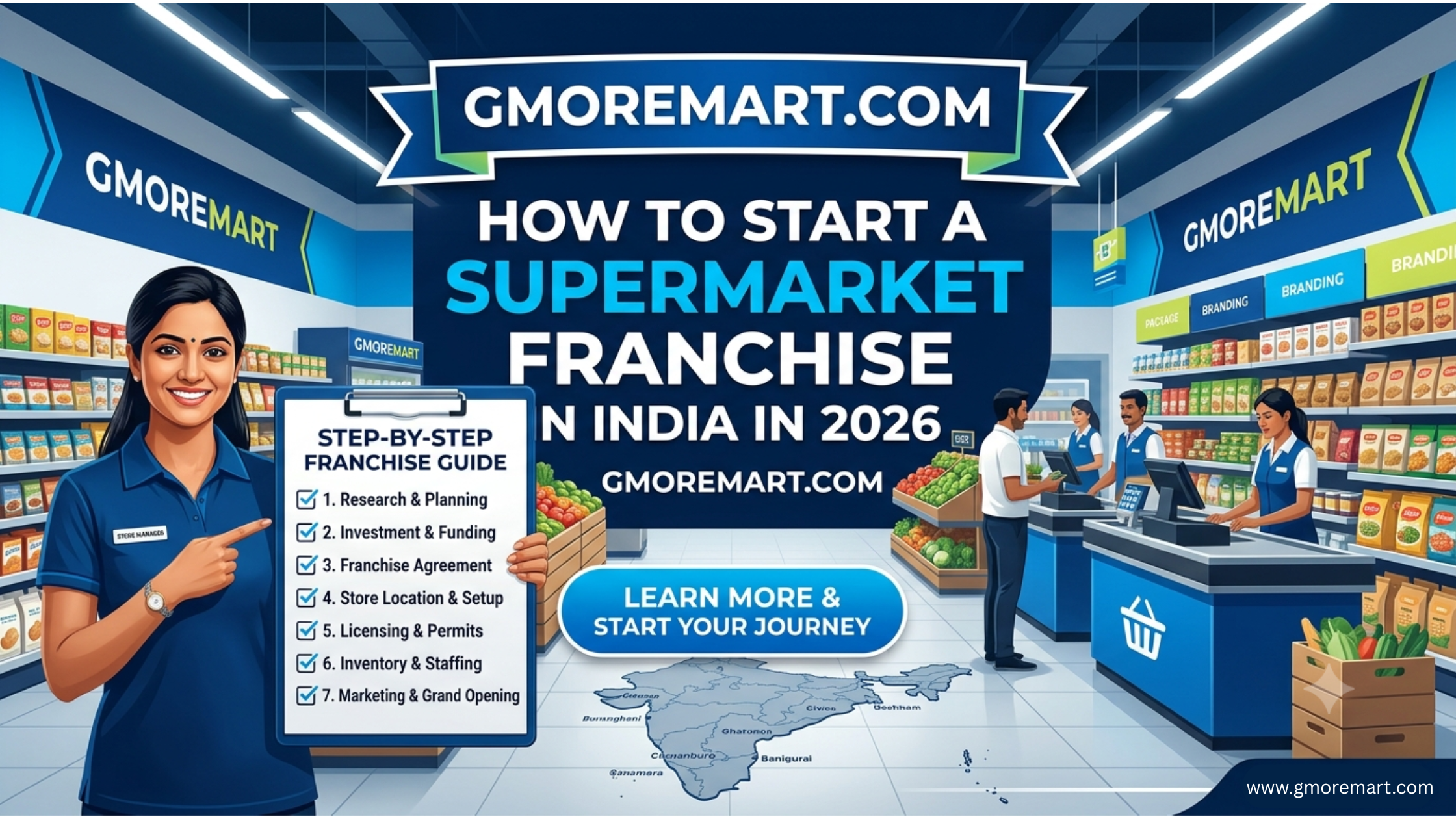
The Indian retail industry is undergoing a significant transformation, and supermarkets have become an essential part of consumers’ everyday lives. Rising disposable incomes, urbanization, digital payments, and changing shopping habits have fueled the demand for organized retail across cities and even Tier II and Tier III towns. As a result, investing in a Supermarket Franchise in India has become one of the most attractive business opportunities for aspiring entrepreneurs in 2026.
Unlike starting an independent grocery store from scratch, a supermarket franchise offers the advantage of operating under an established brand with proven business systems, supplier networks, and marketing support. However, choosing the right franchise and understanding the complete process are crucial for long-term success. This guide explains everything you need to know about starting a supermarket franchise in India, from selecting the right brand to managing day-to-day operations efficiently.
Why Choose a Supermarket Franchise in India?
A supermarket franchise provides entrepreneurs with a ready-made business model that significantly reduces many of the risks associated with launching a new retail business. Since the brand already has customer recognition and operational expertise, franchise owners can focus more on managing the store rather than building trust from the ground up. This makes the learning curve much shorter compared to running an independent supermarket.
The Indian grocery retail market continues to expand due to increasing consumer demand for convenience, branded products, fresh produce, and one-stop shopping experiences. Modern supermarkets now serve as neighborhood shopping destinations offering groceries, household essentials, personal care products, dairy items, snacks, beverages, and much more. These factors make supermarket franchising an attractive and scalable business option in 2026.
Understand the Franchise Business Model
Before investing, it is important to understand how the franchise model works. In a supermarket franchise, the franchisor allows you to use its brand name, business processes, store design, supply chain, and operational systems in exchange for an initial franchise fee and, in many cases, ongoing royalty payments. The franchisor also provides training, marketing support, and operational guidance to help franchisees maintain consistent service standards.
Although the brand offers support, the responsibility of managing daily operations remains with the franchise owner. Hiring employees, maintaining inventory, ensuring customer satisfaction, and achieving sales targets require active involvement. Understanding these responsibilities beforehand helps entrepreneurs set realistic expectations and prepare for long-term business success.
Research the Best Supermarket Franchise Opportunities
One of the biggest decisions you’ll make is choosing the right supermarket franchise. Every brand has different investment requirements, store size expectations, profit margins, and support systems. Instead of selecting a franchise based only on brand popularity, compare multiple opportunities carefully to determine which aligns with your budget and business goals.
Evaluate factors such as franchise fees, return on investment, inventory support, training programs, technology systems, supply chain efficiency, and market reputation. Reading franchise agreements thoroughly and speaking with existing franchise owners can provide valuable insights into the actual business experience. A well-researched decision reduces investment risks and increases your chances of long-term profitability.
Estimate the Total Investment Required
Investment requirements vary depending on the franchise brand, city, and store size. Apart from the franchise fee, entrepreneurs must budget for store interiors, shelving, refrigeration units, billing systems, inventory, employee salaries, rent, security deposits, and marketing expenses. Many first-time business owners underestimate working capital, which can create financial pressure during the initial months.
Preparing a realistic financial plan helps ensure smooth business operations even before the supermarket starts generating consistent profits. It is also advisable to maintain an emergency reserve for unexpected expenses such as equipment maintenance or seasonal inventory requirements. Proper financial planning strengthens the foundation of your supermarket franchise and improves long-term sustainability.
Choose the Right Store Location
Location plays a major role in determining the success of any retail business. A supermarket should ideally be located in residential neighborhoods, busy commercial areas, or rapidly developing localities with high population density. Easy accessibility, parking facilities, and good road visibility significantly improve customer footfall and overall sales performance.
Before finalizing a location, analyze nearby competitors and understand local consumer purchasing behavior. A detailed location study helps identify market gaps and customer demand. Even the strongest franchise brand may struggle if the store is opened in an area with limited customer traffic or poor accessibility.
Complete Legal Registrations and Licenses
Running a supermarket franchise requires compliance with Indian business regulations. Entrepreneurs must obtain all necessary registrations before commencing operations. These typically include business registration, GST registration, FSSAI license for food products, Shop and Establishment registration, and any other state or municipal approvals applicable to the business.
Maintaining proper legal documentation not only ensures regulatory compliance but also enhances customer confidence in your business. Keeping licenses renewed and updated protects your supermarket from unnecessary penalties and operational disruptions. Consulting a legal or business advisor during the setup process can help simplify regulatory requirements.
Set Up the Store According to Brand Standards
One of the biggest advantages of joining a franchise is receiving standardized store layouts and operational guidelines. Most supermarket brands have predefined specifications for shelving, product placement, lighting, branding, billing counters, refrigeration equipment, and customer flow. Following these standards creates a consistent shopping experience across all franchise outlets.
An organized store layout encourages customers to spend more time browsing products and often increases average purchase value. Clean aisles, attractive displays, proper signage, and well-maintained facilities also improve customer satisfaction. Investing in store presentation ultimately contributes to stronger sales and repeat business.
Hire and Train a Reliable Team
Employees directly influence the customer experience inside your supermarket. Courteous staff, efficient billing operators, inventory managers, and floor assistants all contribute to smooth daily operations. Hiring people with a positive attitude and willingness to learn often proves more valuable than hiring based solely on previous experience.
Most supermarket franchises provide initial employee training covering billing systems, inventory handling, hygiene standards, customer service, and operational procedures. Continuous training helps employees stay updated with new products, promotional campaigns, and company policies. A motivated workforce creates a welcoming shopping environment that encourages customer loyalty.
Focus on Inventory Management
Inventory management is one of the most important aspects of running a profitable supermarket franchise. Overstocking ties up valuable capital, while understocking can result in lost sales and dissatisfied customers. Maintaining the right balance requires continuous monitoring of product demand, seasonal trends, and supplier delivery schedules.
Modern Point-of-Sale (POS) systems simplify inventory tracking by providing real-time stock updates and automated reorder alerts. Reviewing sales reports regularly helps identify fast-moving and slow-moving products, enabling smarter purchasing decisions. Efficient inventory management minimizes waste and improves overall profitability.
Invest in Local Marketing and Customer Engagement
Even if your franchise belongs to a well-known supermarket brand, local marketing remains essential for attracting nearby customers. Organizing grand opening offers, seasonal discounts, loyalty programs, referral rewards, and festive promotions can generate immediate interest within your target community. Local advertising through newspapers, flyers, and community events continues to deliver strong results in many areas.
Digital marketing should also be an integral part of your strategy. Creating a Google Business Profile, maintaining active social media pages, and encouraging positive customer reviews improve online visibility. Combining offline promotions with digital marketing creates a balanced approach that strengthens your supermarket’s local presence.
Deliver Outstanding Customer Service
Excellent customer service remains one of the strongest competitive advantages in organized retail. Customers appreciate supermarkets that offer clean environments, well-stocked shelves, helpful employees, and quick billing experiences. Small improvements such as assisting customers in locating products or resolving complaints promptly can significantly influence repeat business.
Satisfied customers often become your most effective brand ambassadors through positive word-of-mouth recommendations. Introducing loyalty programs, personalized offers, and home delivery services can further improve customer retention. Building strong customer relationships is one of the most sustainable ways to grow your supermarket franchise over time.
Common Mistakes to Avoid
Many first-time franchise owners assume that investing in a recognized brand automatically guarantees success. In reality, poor inventory management, weak customer service, inadequate financial planning, and selecting the wrong location remain some of the most common reasons supermarket franchises underperform. Ignoring local customer preferences can also negatively affect sales despite having a strong national brand.
Another common mistake is failing to monitor business performance regularly. Reviewing sales reports, employee productivity, inventory turnover, and customer feedback helps identify opportunities for improvement. Successful franchise owners continuously adapt their strategies based on changing market conditions and customer expectations.
Conclusion
Starting a Supermarket Franchise in India in 2026 offers an excellent opportunity to enter one of the country’s fastest-growing retail sectors. With increasing consumer demand for organized shopping, trusted brands, and convenient grocery solutions, supermarket franchising provides a scalable and relatively low-risk business model for aspiring entrepreneurs.
Success, however, depends on much more than choosing a popular franchise brand. Careful financial planning, selecting the right location, maintaining efficient inventory, hiring skilled employees, delivering exceptional customer service, and consistently following franchise guidelines are all essential for long-term growth. By approaching your investment strategically and focusing on operational excellence, you can build a profitable supermarket franchise that serves your local community while generating sustainable returns for years to come.