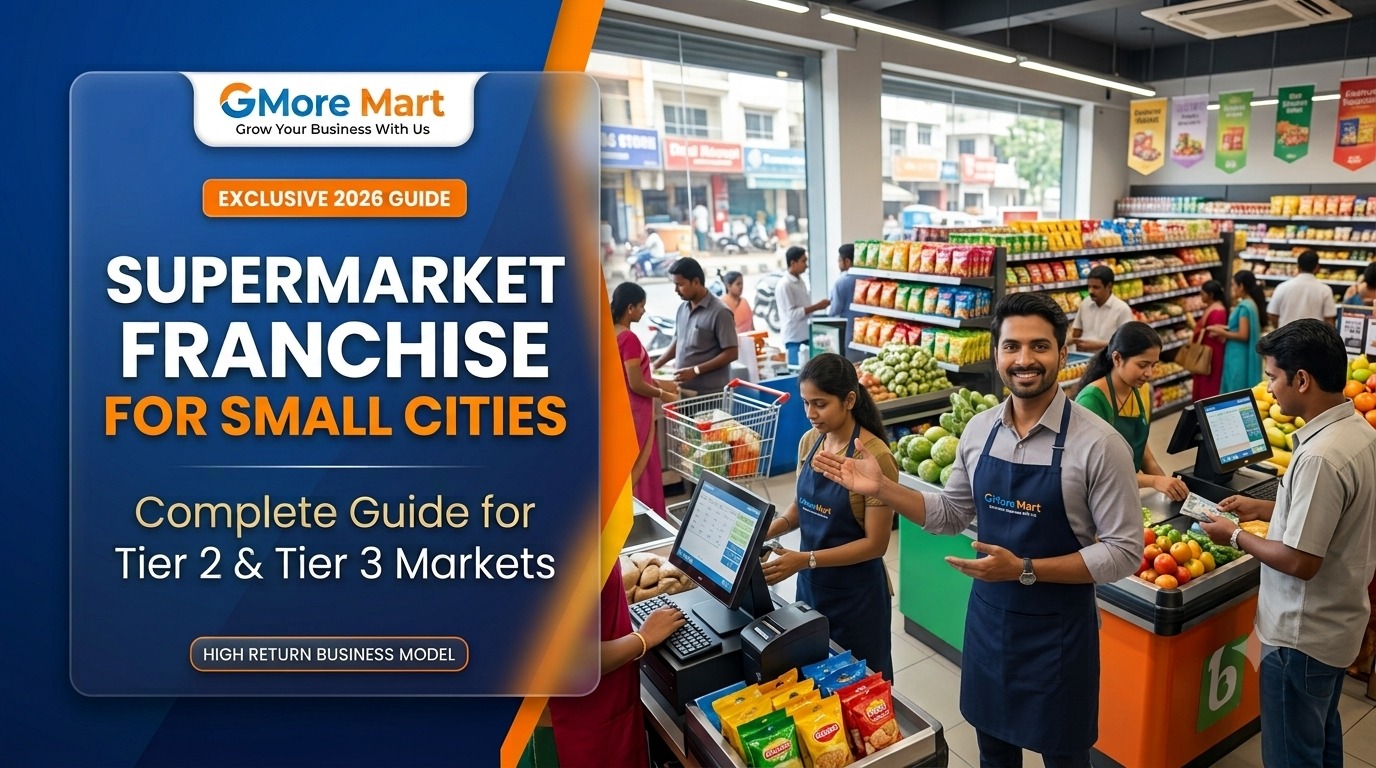
Starting a supermarket in a smaller city can be a promising business opportunity when the location, product mix, investment and daily operations are planned carefully. As customers increasingly look for convenience, product variety and organized shopping experiences, modern supermarkets can complement traditional kirana stores in Tier 2 and Tier 3 markets.
A supermarket franchise for small cities can also reduce some of the challenges involved in starting an independent store by providing an established business model, operational guidance, product sourcing support and other resources.
However, choosing the right franchise opportunity is important. Before investing, you should evaluate the local market, customer demand, store location, investment requirements, competition and expected operating costs.
This guide explains the key factors to consider when evaluating a supermarket franchise for Tier 2 and Tier 3 cities in India.
Why Consider a Supermarket Franchise for Small Cities?
Smaller cities and developing towns are experiencing changes in consumer shopping habits. Customers may still rely heavily on local kirana stores, but organized supermarkets can offer advantages such as:
- Wider product selection
- Convenient one-stop shopping
- Better product display and store organization
- Multiple payment options
- Promotional offers and discounts
- Consistent shopping experience
- Availability of local and branded products
A franchise model can be particularly useful for first-time entrepreneurs because the business may come with an established operating structure rather than requiring the owner to build everything from the beginning.
However, success is not guaranteed by the franchise brand alone. Local demand, location, pricing, inventory management and customer service remain critical factors.
If you are exploring different supermarket franchise business ideas for small cities, compare the business model, investment requirements, support system and expected responsibilities before making a decision.
Is a Supermarket Franchise Suitable for Tier 2 and Tier 3 Cities?
A supermarket franchise can work in both Tier 2 and Tier 3 markets, but the store strategy should be adapted to local customer behavior.
Supermarket Franchise for Tier 2 Cities
Tier 2 cities generally have a larger customer base, developing residential areas and increasing demand for organized retail.
A supermarket in these markets may benefit from:
- Growing residential communities
- Higher demand for branded products
- Better customer spending capacity
- Increasing demand for convenience
- Opportunities to serve nearby neighborhoods
The key is to select a location with sufficient residential demand and regular customer movement rather than choosing a site only because it is in a busy city.
Supermarket Franchise for Tier 3 Cities
Tier 3 cities and smaller towns may require a more localized approach.
Customers may have stronger relationships with neighborhood stores, so a supermarket should focus on convenience, competitive pricing and the products customers actually purchase.
Important considerations include:
- Local purchasing habits
- Price sensitivity
- Availability of essential products
- Local and regional brands
- Residential catchment area
- Competition from kirana stores
The right store size and product mix can be more important than creating a very large supermarket.
What Makes a Supermarket Successful in a Small City?
A successful supermarket is not simply a store with many products. It should match the needs of its target customers.
1. Understand Local Customer Demand
Before opening a store, research what people in the surrounding area actually purchase.
Analyze:
- Household demographics
- Popular grocery categories
- Monthly purchasing patterns
- Local brands
- Price sensitivity
- Seasonal demand
- Existing supermarkets and kirana stores
For example, a location with many families may have strong demand for groceries, packaged foods, personal care products, household essentials and children’s products.
Market research helps prevent the common mistake of stocking products that have low demand.
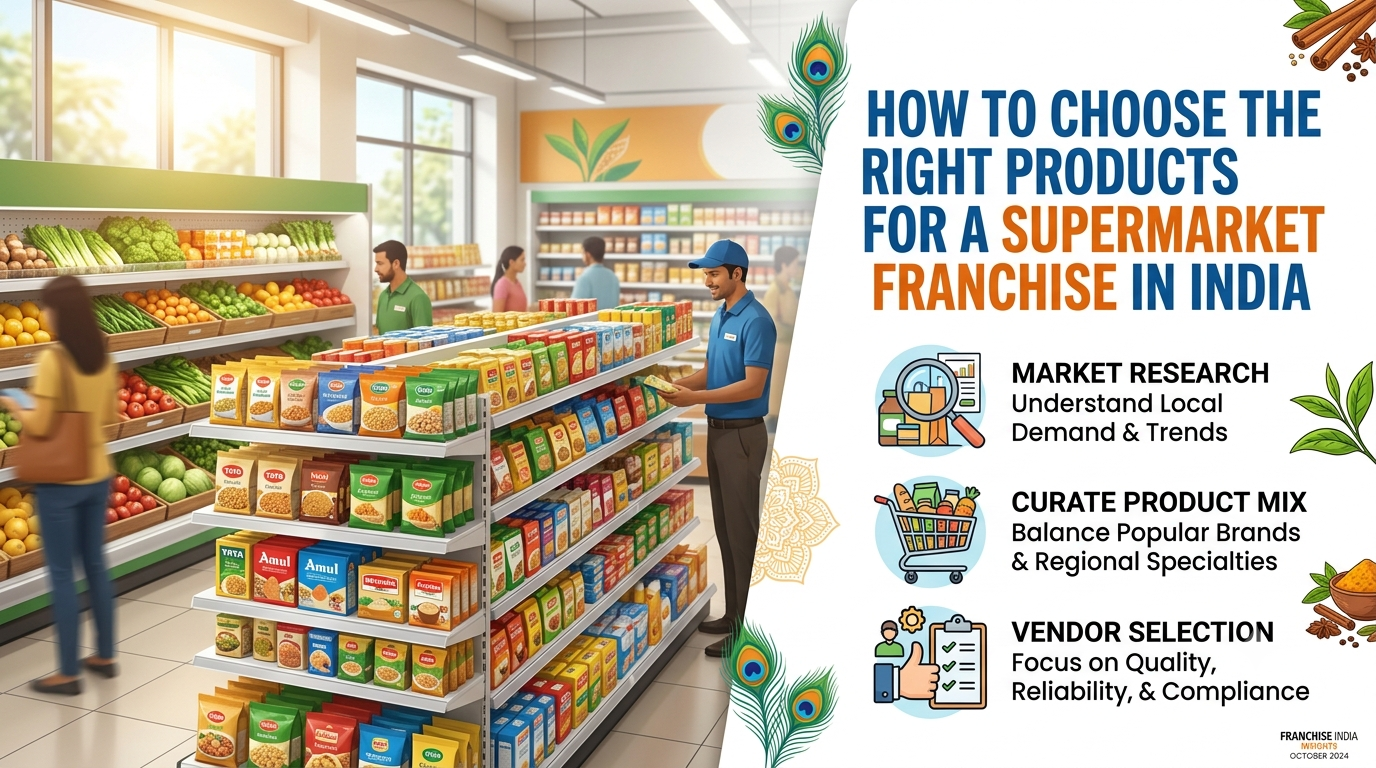
2. Choose the Right Product Mix
Product selection should be based on customer demand rather than simply filling shelves with a large number of products.
A practical supermarket product mix may include:
- Rice, flour and pulses
- Cooking oil and spices
- Packaged foods
- Beverages
- Dairy products
- Personal care products
- Home cleaning products
- Household essentials
- Snacks and confectionery
- Local and regional products
You can learn more about building a suitable supermarket product mix based on customer demand and store requirements.
3. Create a Convenient Shopping Experience
Customers choose supermarkets not only for product variety but also for convenience.
A well-planned store should provide:
- Clear product categories
- Easy navigation
- Clean aisles
- Proper shelf arrangement
- Visible pricing
- Quick billing
- Multiple payment options
- Helpful staff
A convenient shopping experience can encourage repeat visits and improve customer retention.
How to Choose the Best Location for a Supermarket
Location is one of the most important factors when starting a supermarket franchise for small cities.
A good location should be evaluated based on the following factors.
Visibility and Accessibility
Customers should be able to see and access the store easily.
Consider:
- Main roads
- Residential streets
- Parking availability
- Pedestrian access
- Public transport connectivity
- Storefront visibility
A slightly smaller store in an excellent location can sometimes perform better than a larger store in a weak location.
Catchment Area
Analyze the number and type of households that can realistically become regular customers.
Look at:
- Nearby residential complexes
- Apartments
- Independent houses
- Schools and offices
- Local markets
- New housing developments
The goal is to identify whether the surrounding population can generate enough recurring demand.
Footfall
Do not assume that a busy road automatically means strong supermarket sales.
Observe the location at different times of the day and on different days of the week.
Check:
- Morning traffic
- Evening traffic
- Weekend activity
- Pedestrian movement
- Nearby shopping activity
- Vehicle accessibility
Competition
Study existing supermarkets, kirana stores and other grocery retailers nearby.
Competition is not always negative. A strong retail area can indicate existing customer demand. However, you should understand how your store can differentiate itself through product availability, pricing, convenience, service or promotions.
For a broader checklist of requirements before opening a store, see our guide to essential things needed to open a successful supermarket.
How Much Investment Is Required for a Supermarket Franchise?
The investment required for a supermarket franchise depends on several factors, including:
- Store size
- Location
- Interior and fixtures
- Inventory
- Franchise fees
- Technology and POS systems
- Staff requirements
- Marketing
- Working capital
- Local operating expenses
There is no single investment amount that applies to every small-city supermarket.
Before investing, prepare a detailed estimate covering both initial investment and ongoing monthly expenses.
You can use the supermarket franchise calculator to get an initial estimate based on the available store options and requirements.
Remember that a calculator provides an estimate. Actual costs can vary depending on the selected location, store format, products, interiors and other business requirements.
What to Check When Choosing a Low Investment Supermarket Franchise
A low investment does not necessarily mean a better business opportunity.
Before choosing a low investment supermarket franchise, check:
- What is included in the franchise package?
- Is inventory included?
- Are interiors and fixtures included?
- Is there a franchise fee?
- What technology or POS system is provided?
- What training is available?
- Is marketing support provided?
- Are there recurring fees or royalties?
- What working capital will be required?
- What support is available after launch?
Always compare the total cost of ownership, not just the initial franchise price.
Supermarket Franchise vs Independent Supermarket
Starting an independent supermarket gives you complete control over branding, suppliers, pricing and business decisions.
However, you may need to develop everything yourself, including:
- Brand identity
- Store processes
- Supplier relationships
- Product sourcing
- Marketing strategy
- Staff training
- Inventory systems
A franchise can provide an established business structure and operational support, but it may also involve franchise fees, contractual conditions and restrictions.
The right choice depends on your experience, investment capacity, business goals and willingness to operate independently.
How to Evaluate Supermarket Franchise Opportunities in India
Before selecting a franchise, conduct proper due diligence.
Consider these factors:
Brand and Business Experience
Understand how long the business has operated and how its franchise model works.
Franchise Support
Ask what support is provided for:
- Location selection
- Store design
- Setup
- Product sourcing
- Staff training
- Marketing
- Technology
- Post-launch operations
Agreement and Fees
Read the franchise agreement carefully.
Understand:
- Initial franchise fees
- Recurring fees
- Royalty structure
- Agreement duration
- Renewal conditions
- Territory restrictions
- Exit conditions
Existing Franchisees
Speak with existing franchisees where possible.
Ask about:
- Actual setup experience
- Support quality
- Product availability
- Operational challenges
- Customer response
- Ongoing expenses
Real franchisee feedback can help you identify potential issues before making a financial commitment.
For entrepreneurs planning their first store, our guide on how to start a supermarket franchise in India provides additional information about the process.
Why Inventory Management Is Critical for Small-City Supermarkets
Inventory management directly affects profitability.
Too much inventory can lock up working capital and increase the risk of expired or slow-moving products.
Too little inventory can result in stockouts and lost customers.
A supermarket should monitor:
- Fast-moving products
- Slow-moving products
- Stock levels
- Expiry dates
- Seasonal demand
- Reorder levels
- Product margins
- Wastage
Regularly reviewing sales data can help determine which products deserve more shelf space and which products should be reduced.
How Can a Supermarket Compete With Local Kirana Stores?
Kirana stores have strong local relationships and often provide personalized service. A supermarket should not try to compete only on price.
Instead, focus on a combination of:
- Product variety
- Competitive pricing
- Clean store environment
- Convenient shopping
- Product availability
- Attractive offers
- Digital payments
- Loyalty programs
- Customer service
A supermarket can also build stronger local relationships by understanding the specific needs of customers in its neighborhood.
Is a Supermarket Franchise Profitable?
A supermarket franchise can become profitable when the store has sufficient customer demand and is managed efficiently.
However, profitability depends on several variables, including:
- Sales volume
- Average customer basket size
- Gross margins
- Rent
- Staff costs
- Electricity and operating expenses
- Inventory turnover
- Wastage
- Promotions
- Local competition
Instead of relying only on advertised profit figures, calculate the expected revenue and expenses for your specific location.
A realistic business plan should include conservative, expected and optimistic scenarios.
Supermarket Franchise Checklist Before Investing
Before investing in a supermarket franchise for small cities, review the following checklist:
- Research the local market
- Analyze customer demand
- Evaluate the proposed location
- Study nearby competition
- Estimate total investment
- Calculate working capital requirements
- Understand franchise fees and recurring charges
- Review the franchise agreement
- Check supplier and inventory support
- Understand training and operational support
- Speak with existing franchisees
- Prepare a monthly expense estimate
- Estimate expected sales
- Calculate the break-even point
- Plan local marketing
- Keep sufficient working capital for the initial months
This checklist can help you make a more informed decision rather than selecting a franchise based only on its brand name or promotional claims.
Why Consider G-More Mart for Your Supermarket Journey?
G-More Mart provides a supermarket franchise model designed to support entrepreneurs with different aspects of setting up and operating a supermarket.
The support described by G-More Mart includes areas such as store setup, product sourcing, technology, staff training, marketing and ongoing operational assistance.
However, every prospective franchisee should evaluate the model according to their own location, investment capacity and business objectives.
If you are exploring supermarket franchise opportunities in India, review the available information and understand the requirements before submitting an application.
Final Thoughts
A supermarket franchise for small cities can be an attractive business opportunity when it is supported by strong local demand, the right location, suitable product selection and disciplined financial management.
Tier 2 and Tier 3 markets can offer opportunities for organized retail, but entrepreneurs should not assume that every small city or every location will perform equally well.
Before investing, focus on the fundamentals:
Location + Customer Demand + Product Mix + Investment Planning + Inventory Management + Customer Experience
A well-researched approach can help reduce unnecessary risk and create a stronger foundation for long-term supermarket growth.
If you are ready to explore a supermarket franchise opportunity, you can Apply Now and discuss your requirements with G-More Mart.
Frequently Asked Questions
1. Is a supermarket franchise suitable for small cities?
Yes, a supermarket franchise can be suitable for small cities when the location has sufficient customer demand and the product mix matches local purchasing habits. Tier 2 and Tier 3 markets should be evaluated individually based on population, competition, spending patterns and nearby residential areas.
2. How much does a supermarket franchise cost in India?
The cost varies depending on store size, location, franchise fees, interiors, inventory, technology and working capital. Instead of relying on a fixed figure, calculate the estimated setup and monthly operating costs for your specific store location.
3. Is a supermarket franchise profitable in Tier 2 and Tier 3 cities?
It can be profitable, but profitability depends on sales volume, product margins, rent, staff costs, inventory turnover, competition and operating efficiency. A location-specific business plan is essential before making an investment decision.
4. What is the best location for a supermarket in a small city?
A good supermarket location generally has strong residential demand, visibility, accessibility and sufficient customer movement. Nearby apartments, residential neighborhoods, offices and complementary businesses can contribute to recurring customer traffic.
5. How do I choose the right product mix for a small-city supermarket?
Start by studying local purchasing behavior and identifying essential, fast-moving and seasonal products. Combine national brands with relevant regional products and regularly review sales data to identify fast- and slow-moving inventory.
6. Should I choose a supermarket franchise or start an independent store?
A franchise can provide an established business model and operational support, while an independent store provides greater control over branding and operations. The better option depends on your experience, investment capacity, business goals and preferred level of support.
7. What should I check before investing in a supermarket franchise?
Review the total investment, franchise fees, recurring charges, agreement terms, supplier support, training, technology, marketing assistance, inventory systems and feedback from existing franchisees. You should also evaluate the proposed store location and prepare a realistic financial plan.