
The retail grocery industry has remained one of the most stable and resilient business sectors, even during periods of economic uncertainty. People purchase groceries, household essentials, and daily-use products regardless of market conditions, making supermarkets a business with consistent customer demand. However, while starting an independent supermarket can be rewarding, it also comes with significant challenges such as building brand recognition, finding reliable suppliers, and earning customer trust.
This is where Supermarket Franchises offer a distinct advantage. Instead of starting from scratch, entrepreneurs can operate under an established brand with proven business systems, operational support, and an existing customer base. The franchise model reduces many of the uncertainties associated with launching a new retail business and provides a structured path toward growth.
Whether you’re a first-time entrepreneur or an experienced investor looking to diversify your portfolio, Supermarket Franchises can provide an attractive balance of stability, profitability, and long-term growth. In this guide, we’ll explore why investing in a supermarket franchise is considered one of the smartest business opportunities today and what makes it a profitable venture.
1. Established Brand Recognition Builds Instant Customer Trust
One of the biggest reasons entrepreneurs choose Supermarket Franchises is the advantage of operating under a recognized brand name. Customers naturally feel more comfortable shopping at stores they already know and trust. Instead of spending years building your reputation, a franchise allows you to benefit from the goodwill the brand has already earned in the market.
Brand recognition also reduces the time and cost required to attract customers. Established supermarket brands often have loyal shoppers who actively seek out their stores. This built-in trust helps generate sales from the very beginning, giving franchise owners a significant advantage over independent supermarkets.
Additionally, customers often associate franchise brands with consistent product quality, fair pricing, and reliable service. This confidence encourages repeat visits and strengthens long-term customer loyalty.
2. Proven Business Model Reduces Risk
Launching a new supermarket independently involves considerable trial and error. Business owners must develop operating procedures, identify suppliers, manage inventory, and create marketing strategies without knowing what will work best. In contrast, Supermarket Franchises operate using a business model that has already been tested across multiple locations.
Franchise companies provide standardized systems for store operations, merchandising, inventory management, billing, employee training, and customer service. These processes are continuously refined based on real-world experience, reducing operational mistakes and improving efficiency.
Although every business carries some level of risk, working with a proven franchise system minimizes many common startup challenges. This structured approach allows franchise owners to focus more on business growth rather than experimenting with operational processes.
3. Growing Demand for Grocery and Daily Essentials
The grocery retail industry benefits from one major advantage—consistent consumer demand. Unlike seasonal or luxury businesses, supermarkets sell products that people purchase regularly, including food, beverages, cleaning supplies, personal care products, and household essentials. This makes Supermarket Franchises one of the most dependable retail investments.
Population growth, urbanization, and changing lifestyles continue to increase the demand for organized retail stores. Many consumers now prefer supermarkets because they offer convenience, product variety, competitive prices, and a comfortable shopping experience under one roof.
As customer expectations evolve, supermarkets that combine quality products with efficient service are well-positioned for long-term success. Franchise businesses often adapt quickly to changing market trends, helping franchise owners stay competitive.
4. Strong Supplier Network and Better Purchasing Power
One of the biggest operational challenges for independent supermarkets is managing supplier relationships and negotiating competitive prices. Supermarket Franchises typically solve this problem through centralized purchasing systems and established supplier networks.
Because franchise brands purchase products in large volumes, they often receive better pricing and exclusive deals from manufacturers and distributors. These savings allow franchise owners to offer competitive prices while maintaining healthy profit margins.
Reliable supply chains also reduce stock shortages and ensure consistent product availability. Customers appreciate finding their preferred products whenever they visit, which improves satisfaction and encourages repeat purchases.
5. Comprehensive Training and Ongoing Business Support
Many aspiring entrepreneurs hesitate to enter the retail industry because they lack previous business experience. Fortunately, one of the major advantages of Supermarket Franchises is the extensive training and operational support provided by franchisors.
Training programs typically cover store management, inventory control, billing systems, employee supervision, customer service, merchandising, and financial management. This structured learning helps franchise owners confidently manage daily operations.
Support doesn’t end after the store opens. Most franchisors continue providing marketing assistance, software updates, promotional campaigns, operational guidance, and business consultations to help franchise partners improve performance over time.
6. Modern Technology Improves Operational Efficiency
Technology has become an essential part of successful supermarket operations. Most Supermarket Franchises provide franchise owners with advanced retail technology, including Point of Sale (POS) systems, inventory management software, barcode scanners, customer loyalty programs, and sales reporting tools.
These systems automate routine tasks, reduce billing errors, and provide real-time insights into product performance and inventory levels. Store owners can quickly identify fast-selling products, manage stock efficiently, and reduce unnecessary losses.
Technology also improves the customer experience through faster checkouts, digital payment options, and personalized promotions. Efficient operations ultimately contribute to higher customer satisfaction and increased profitability.
7. Multiple Revenue Opportunities Increase Profitability
A well-managed supermarket generates income from far more than grocery sales alone. Many Supermarket Franchises expand their revenue through value-added services and diversified product categories.
In addition to groceries, supermarkets often sell fresh produce, bakery products, dairy items, frozen foods, beverages, personal care products, household essentials, pet supplies, and health products. Some locations also offer home delivery, online ordering, utility bill payments, and mobile recharge services, creating additional income streams.
Seasonal promotions, festive sales, loyalty programs, and bundled product offers further increase customer spending and improve overall revenue. Diversifying services helps franchise owners maximize profitability throughout the year.
8. Marketing Support Drives Customer Growth
Marketing is often expensive and time-consuming for independent businesses. One of the strongest advantages of Supermarket Franchises is access to professional marketing campaigns managed by the franchisor.
National advertising, digital promotions, social media campaigns, festival offers, loyalty rewards, and branded promotional materials help attract new customers while retaining existing ones. Franchise owners benefit from coordinated marketing efforts that would otherwise require significant investment.
At the local level, franchise businesses can also participate in community events, launch neighborhood promotions, and create personalized customer engagement activities. Combining national branding with local marketing strengthens visibility and customer relationships.
9. Easier Access to Financing and Expansion Opportunities
Financial institutions often view established franchise businesses as lower-risk investments compared to completely new independent ventures. Because Supermarket Franchises operate using proven business models and recognized brands, banks may be more willing to consider financing applications, depending on the applicant’s eligibility and local lending policies.
As the business grows, successful franchise owners may also have opportunities to open additional outlets within the same franchise network. Expanding into multiple locations becomes more manageable because operational systems, supplier relationships, and brand standards are already established.
This scalability allows entrepreneurs to build a larger retail business over time without starting each new location from scratch.
10. Long-Term Growth Potential in the Organized Retail Sector
The organized retail market continues to grow as consumers increasingly prioritize convenience, hygiene, product variety, and reliable shopping experiences. This trend creates significant long-term opportunities for Supermarket Franchises, especially in developing urban areas and expanding suburban communities.
Changing consumer behavior, increasing disposable income, and the rise of digital shopping have encouraged many supermarket brands to adopt omnichannel retail strategies. Customers can now shop both in-store and online, creating additional sales opportunities for franchise owners.
Entrepreneurs who invest in customer service, efficient operations, and continuous improvement are well-positioned to benefit from this evolving retail landscape. A supermarket franchise that adapts to market trends can remain competitive and profitable for many years.
How to Choose the Right Supermarket Franchise
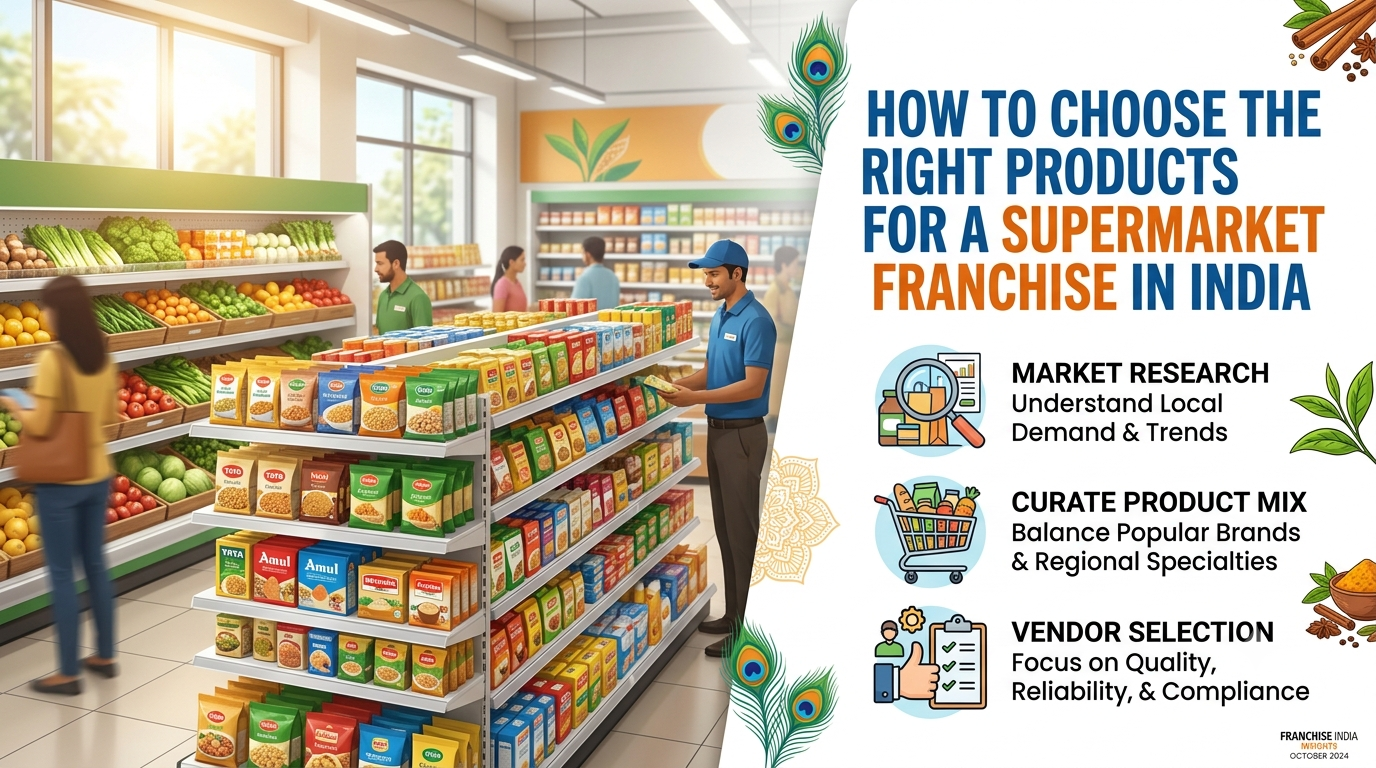
Before investing, it’s important to evaluate several factors rather than selecting a franchise based solely on brand popularity. Research the company’s reputation, franchise support, training programs, investment requirements, royalty structure, technology systems, and growth history. Speak with existing franchise owners to understand their experience and day-to-day operations.
Carefully review the franchise agreement and understand your responsibilities, territory rights, and ongoing costs. Choosing a franchise with transparent communication, strong operational support, and a customer-focused approach can significantly improve your chances of long-term success.
Conclusion
Supermarket Franchises offer entrepreneurs a practical way to enter the grocery retail industry with the backing of an established brand and a proven business model. From instant customer trust and reliable supplier networks to professional training, technology, and marketing support, franchise ownership provides advantages that can reduce startup challenges and improve operational efficiency.
While success still depends on effective management, customer service, and financial discipline, a well-chosen supermarket franchise can provide a solid foundation for sustainable growth. As consumer demand for organized retail continues to rise, franchise owners who focus on delivering value and maintaining high standards are well-positioned to build a profitable and resilient business.
If you’re exploring opportunities in the retail sector, Supermarket Franchises deserve serious consideration. With thorough research, careful planning, and a commitment to excellence, they can become a rewarding investment that supports both financial growth and long-term business success.